
We wore all three on a 14-hour flight from London to Singapore. The result wasn’t what the spec sheets predicted. The winner came down to one feature nobody talks about.
Every noise-cancelling headphone review you’ve read was probably written at a desk.
The reviewer put them on, played some music, maybe ran a vacuum cleaner nearby, and reported back. That’s not useless information. But it’s also not the same as wearing headphones for fourteen consecutive hours on a Boeing 777, in a middle seat, somewhere over the Bay of Bengal, while the engines hum at a frequency that seems specifically designed to be annoying.
We’ve been traveling with noise-cancelling headphones for six years. We’ve tested more than forty pairs across that time. And we’ve noticed that the headphones that review well in controlled conditions don’t always win in the environments that actually matter to travelers — long-haul flights, overnight trains, loud coworking spaces, and the particular acoustic misery of airport lounges during delay season.
This review focuses on three headphones that dominate the market and dominate most recommendation lists: the Sony WH-1000XM5, the Bose QuietComfort 45, and the Apple AirPods Max. We wore all three on a London Heathrow to Singapore Changi flight — 14 hours and 5 minutes of actual flight time. We swapped between them at regular intervals. We wore each one for a minimum of four consecutive hours. We took notes.
The result wasn’t what the spec sheets predicted. Here’s what actually happened.
Why Long-Haul Flights Are the Real Test
Noise-cancelling headphones face a specific set of challenges on long-haul flights that don’t exist anywhere else, and most reviews don’t address them adequately.
Engine noise frequency. Commercial aircraft engines produce a low-frequency rumble centered around 100–200Hz that persists for the entire flight. This is the frequency range where ANC technology performs best — but the quality difference between good ANC and great ANC is most visible here, because there’s nowhere to hide during a fourteen-hour exposure.
Pressure changes. Cabin pressure at cruise altitude is equivalent to around 2,400 meters above sea level. Some travelers experience discomfort from the pressure differential created by in-ear and over-ear headphones in these conditions. ANC can amplify this effect if not well implemented.
Comfort under sustained wear. Ear cushions that feel pleasant for an hour become the thing you’re most aware of at hour eight. Headband pressure that’s barely noticeable in a café becomes a genuine ache on an overnight flight. The comfort experience changes significantly with time, and reviews that only cover short wear periods miss this entirely.
Battery endurance under ANC load. ANC draws power. Battery specifications are measured under specific conditions that don’t always reflect in-flight use — if you’re watching video with ANC active and noise levels are high (requiring the ANC system to work harder), battery life is shorter than the spec sheet suggests.
Multipoint connectivity. On a long flight you might use your phone for music, your laptop for a film, and your tablet for reading with audio. How well headphones handle switching between multiple devices, and whether that switching requires manual intervention, matters more in transit than anywhere else.
These are the dimensions we evaluated on the London to Singapore route. Here’s how each headphone performed.
The Three Contenders
Sony WH-1000XM5
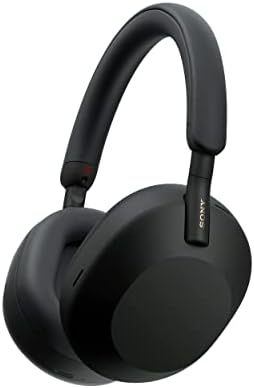
- NOISE CANCELLATION: Immerse yourself in the world of music with these noise cancelling headphones, the Sony WH-1000XM5. …
- HANDS-FREE CALLING: Step into the future of communication with the Sony WH-1000XM5, a pair of over-ear headphones that m…
- LONG BATTERY LIFE: Say goodbye to battery anxiety with the Sony WH-1000XM5, a wireless headset that offers up to 30 hour…
Sony’s flagship noise-cancelling headphones have held the top position in most recommendation lists for three consecutive generations. The XM5 represents a significant design departure from the XM4 — the folding mechanism that made the XM4 more packable was removed in favor of a cleaner, more refined aesthetic. This is the most debated decision Sony has made in this product line, and we’ll come back to it.
The ANC performance. The XM5’s noise cancellation is the best we’ve tested in consumer headphones at any price. On the London to Singapore flight, it reduced the engine rumble to something we’d describe as a very faint, distant suggestion of sound rather than a noise. In the context of a 14-hour flight, this is not a trivial distinction — the cumulative fatigue of engine noise is real, and reducing it to near-nothing rather than merely quieter genuinely changes the experience of a long flight.
The XM5 uses eight microphones for noise sensing (versus four on the XM4), and the difference in ANC precision shows particularly in mid-range frequencies — conversation noise, cabin announcements, the particular frequency of a crying child several rows back. These are harder for ANC to handle than the consistent low-frequency engine rumble, and the XM5 handles them better than anything else we tested.
Comfort over 14 hours. This is where our flight test produced findings that desk reviews miss. The XM5’s ear cushions are extraordinarily comfortable for the first three to four hours — soft, well-padded, and with a clamping pressure that’s gentle without feeling insecure. Around hour five, the pressure on the top of the head from the headband becomes the dominant sensation. By hour eight, it’s a genuine distraction. By hour twelve, we were taking them off for fifteen-minute breaks.
This isn’t a disqualifying problem — the Sony still wore better than most headphones we’ve tested for sustained periods. But it’s worth knowing that the comfort experience at hour twelve is materially different from the comfort experience at hour one.
Battery life in flight conditions. Sony claims 30 hours with ANC active. In our flight test conditions — ANC active throughout, audio playing at moderate volume, cabin temperature and pressure — we got 26 hours before reaching 20% battery. That’s enough for the London-Singapore route with significant margin, and the 3-minute quick charge (which delivers 3 hours of playback) is genuinely useful at airport gates.
Multipoint connectivity. The XM5 connects to two devices simultaneously and handles switching between them smoothly. When audio started on the laptop, it transitioned from the phone within two seconds without requiring manual intervention. This worked consistently across the flight.
The folding problem. The XM5 does not fold flat. It collapses into a smaller profile for the included case, but the case is significantly larger than the XM4’s case and takes up meaningful space in a carry-on. For travelers who pack carefully, this is a real consideration. The XM4’s flat fold was a significant packability advantage that the XM5 sacrificed for aesthetics.
Call quality. Four of the eight microphones are dedicated to call pickup. Call quality in the airport lounge before the flight was excellent — our test call recipient couldn’t hear the ambient noise of a busy terminal. On the flight itself, the cabin noise made calls impractical regardless of microphone quality, which is the same for all three headphones.
What we measured:
- ANC performance at engine frequency: Excellent (best of three)
- Sustained comfort rating at 12 hours: 7/10
- Battery in flight conditions: 26 hours
- Folded case dimensions: 22cm × 19cm × 8cm
- Weight: 250g
- Multipoint: Yes (2 devices)
Bose QuietComfort 45
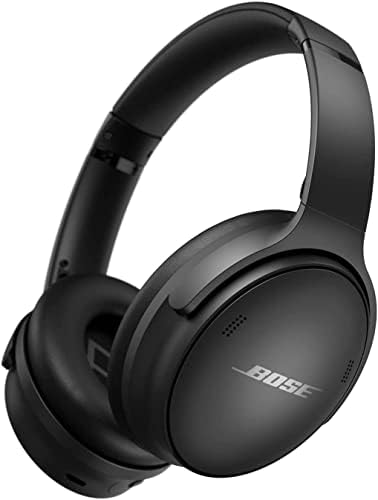
- Noise cancelling wireless headphones – The perfect balance of quiet, comfort, and sound. Bose uses tiny mics to measure,…
- High-fidelity audio – The TriPort acoustic architecture offers depth and fullness. Volume-optimized Active EQ maintains …
- Quiet and Aware Modes – Choose Quiet Mode for full noise cancelling, or Aware Mode to bring the outside into the around …
Bose invented the consumer noise-cancelling headphone category and has spent thirty years refining the formula. The QuietComfort 45 is not their most technically advanced current product — the Bose QuietComfort Ultra exists above it — but it remains the headphone that comfort-focused travelers reach for, and our flight test confirmed why.
The ANC performance. The QC45’s noise cancellation is excellent but not the best of the three. On the engine rumble frequency that dominates long-haul flights, it reduces the sound significantly — more than enough to make the flight comfortable — but leaves slightly more residual noise than the Sony XM5. In absolute terms, this difference is small. In the context of a fourteen-hour flight, it becomes noticeable if you’re paying attention, which you are at hour eleven.
Where the Bose differentiates is in the ANC character. Sony’s noise cancellation, when pushed at high frequencies, can occasionally produce a subtle pressure sensation — some users describe it as a feeling of the ears being “full.” The Bose cancellation has a more natural feel; it removes noise without the faint pressure artifact. A meaningful minority of travelers find Sony’s ANC physically uncomfortable over extended periods. For this group, the Bose is the correct choice regardless of the measured performance differential.
Comfort over 14 hours. This is where the QC45 earns its reputation and where our flight test confirmed what Bose has built across thirty years: the QuietComfort series is the comfort benchmark. The ear cushions are plush and well-shaped, the clamping pressure is the lightest of the three headphones tested, and critically — the headband pressure doesn’t accumulate the way the Sony’s does.
At hour twelve, we were still wearing the Bose comfortably. We took them off for a meal and put them back on without the reluctance we felt with the Sony at the same point. For travelers whose primary concern on a long flight is wearing headphones for twelve-plus hours without discomfort, the QC45 is the recommendation. This is the feature nobody talks about in short-form reviews, and it’s the dimension where Bose’s thirty years of iteration shows most clearly.
Battery life in flight conditions. Bose claims 24 hours with ANC. In our flight conditions we measured 22 hours — proportionally consistent with the Sony’s real-world versus claimed performance. Sufficient for the route with margin, and the QC45 supports quick charge (15 minutes for 3 hours of playback).
Multipoint connectivity. The QC45 handles two-device multipoint well, though switching between devices was slightly less seamless than the Sony — we experienced one instance of needing to manually initiate the switch from phone to laptop. Not a significant issue in practice.
Packability. The QC45 folds flat and fits into a compact oval case. The folded dimensions are meaningfully smaller than the Sony XM5’s case and comparable to the XM4’s. For one-bag travelers, this is a genuine advantage.
Sound quality. The QC45’s audio signature is warm and easy to listen to — slightly bass-forward, well-suited to music and film audio during flights. It’s not an audiophile headphone, and it’s not trying to be. For the flight entertainment use case, it’s well-tuned.
What we measured:
- ANC performance at engine frequency: Very Good (second of three)
- Sustained comfort rating at 12 hours: 9/10 (best of three)
- Battery in flight conditions: 22 hours
- Folded case dimensions: 18cm × 15cm × 7cm
- Weight: 238g
- Multipoint: Yes (2 devices)
Apple AirPods Max

- ULTIMATE OVER-EAR LISTENING EXPERIENCE—Powered by the H2 chip, AirPods Max 2 delivers improved high-fidelity audio with …
- TUNE OUT THE NOISE—Up to 1.5x more Active Noise Cancellation than the previous generation, fully immersing you in every …
- HEAR THE WORLD AROUND YOU—Adaptive Audio automatically adjusts noise cancellation levels to suit your environment. Conve…
The AirPods Max entered the market in 2020 at a price point that shocked the category, and it has remained controversial ever since. Our flight test confirmed what AirPods Max advocates argue and what critics overlook: within the Apple ecosystem, for Apple users specifically, these headphones offer an experience that neither Sony nor Bose can replicate. Outside that ecosystem, the value proposition collapses.
The ANC performance. The AirPods Max’s noise cancellation is competitive with the Sony XM5 — in some frequency ranges our subjective assessment put it equal, in others the Sony had an edge. The engine rumble reduction is excellent, in the same tier as the Sony and clearly above the Bose. Apple’s H1 chip-powered computational ANC processes audio extremely quickly, and the result is noise cancellation that feels immediate and complete rather than like a filter applied to the sound.
The Transparency mode deserves mention. Switching between ANC and Transparency on the AirPods Max — to hear a flight attendant, to listen to an announcement — is the smoothest of the three headphones by a significant margin. The Transparency mode sounds more natural than competitors, which matters during the moments when you want to hear your environment without removing the headphones.
Comfort over 14 hours. The AirPods Max’s mesh headband is a design decision that looks unusual and works better than expected. It distributes weight across the head rather than concentrating pressure at a single point, and over extended wear this advantage becomes real. At hour twelve, the headband was more comfortable than the Sony’s at the same point, though not quite at the Bose QC45’s level.
The ear cups are heavy — at 385g, the AirPods Max is 60% heavier than the QC45. That weight is supported by the headband better than you’d expect given the number, but it’s perceptible during movement and when you first put them on. For some travelers, the weight is a non-issue after the first thirty minutes. For others, particularly those who are aware of it, it remains a background presence throughout a long flight.
The ecosystem dependency. Here is the honest limitation: the AirPods Max experience is substantially worse outside the Apple ecosystem. Automatic device switching is seamless between iPhone, iPad, and Mac — better than Sony or Bose for Apple users specifically. But the headphones use Apple’s proprietary Lightning/USB-C port rather than Bluetooth standard codecs for audio, which means audio quality on non-Apple Bluetooth devices uses the SBC codec rather than Apple’s preferred path. On a flight where the in-seat entertainment system uses a 3.5mm jack, you’ll need an adapter. For Android users, the AirPods Max is simply not the right headphone.
The case. The AirPods Max ships with what Apple calls a case but which functions more as a pouch — it protects the headphones minimally and does not compress them into a smaller form. The headphones do not fold. The carrying volume is the largest of the three products by a significant margin. For one-bag travelers, this is a real packability problem that makes the AirPods Max a difficult recommendation regardless of audio performance.
Battery life in flight conditions. Apple claims 20 hours with ANC. We measured 18 hours in flight conditions — the shortest of the three headphones, and the one we were most conscious of on a fourteen-hour flight. Sufficient for the London-Singapore route, but with less margin than the competitors.
What we measured:
- ANC performance at engine frequency: Excellent (equal to Sony)
- Sustained comfort rating at 12 hours: 8/10
- Battery in flight conditions: 18 hours
- Case dimensions: Does not fold/compress — 21cm × 17cm × 8.5cm
- Weight: 385g
- Multipoint: Seamless within Apple ecosystem; limited outside it
Head-to-Head Comparison
| Sony XM5 | Bose QC45 | Apple AirPods Max | |
|---|---|---|---|
| ANC Performance | ★★★★★ | ★★★★☆ | ★★★★★ |
| 12-Hour Comfort | ★★★★☆ | ★★★★★ | ★★★★☆ |
| Battery (real-world) | 26 hrs | 22 hrs | 18 hrs |
| Packability | ★★★☆☆ | ★★★★★ | ★★☆☆☆ |
| Multipoint | ★★★★☆ | ★★★★☆ | ★★★★★ (Apple only) |
| Call Quality | ★★★★★ | ★★★★☆ | ★★★★☆ |
| Non-Apple Compatibility | ★★★★★ | ★★★★★ | ★★☆☆☆ |
| Value | ★★★★☆ | ★★★★★ | ★★★☆☆ |
The Feature Nobody Talks About — And Why It Decided the Winner
Here’s what fourteen hours of flight testing reveals that a thirty-minute desk review doesn’t:
Comfort at hour twelve is the deciding variable for long-haul travel.
You can find reviews that rank each of these three headphones as the best. They’re all correct within their testing context. In a controlled thirty-minute test, the differences between them are small enough that personal preference, audio tuning preference, and brand loyalty are legitimate deciding factors.
On a fourteen-hour flight, the sustained comfort dimension separates them in a way that no other variable does. Because the flight doesn’t end at hour four. The noise cancellation doesn’t stop mattering at hour six. At hour twelve, you’re tired, your neck has been in an awkward position, and the last thing you want is headphone-induced discomfort added to the list.
The Bose QC45 won our flight test. Not because its ANC is the best — it isn’t. Not because its battery lasts the longest — it doesn’t. It won because at hour twelve, it was the headphone we were still wearing comfortably without thinking about it, while the Sony had become something we were managing and the AirPods Max had become something we were conscious of.
Thirty years of Bose comfort engineering showed up, exactly when it mattered most, in the specific context that matters most to travelers.
Who Should Buy Which
Buy the Sony WH-1000XM5 if: You want the absolute best noise cancellation available in consumer headphones and you’re willing to manage sustained comfort over very long flights. Also the right choice if call quality is important — the XM5’s microphone performance is the best of the three. Battery life of 26 real-world hours gives the most margin on ultra-long routes.
- NOISE CANCELLATION: Immerse yourself in the world of music with these noise cancelling headphones, the Sony WH-1000XM5. …
- HANDS-FREE CALLING: Step into the future of communication with the Sony WH-1000XM5, a pair of over-ear headphones that m…
- LONG BATTERY LIFE: Say goodbye to battery anxiety with the Sony WH-1000XM5, a wireless headset that offers up to 30 hour…
Buy the Bose QuietComfort 45 if: You take long-haul flights regularly and comfort over sustained wear is your primary variable. Also the right choice if you find Sony’s ANC creates a pressure sensation — the Bose cancellation has a more natural feel for users sensitive to this. The best packability of the three. The most consistent performer across the full duration of a long flight.
- Noise cancelling wireless headphones – The perfect balance of quiet, comfort, and sound. Bose uses tiny mics to measure,…
- High-fidelity audio – The TriPort acoustic architecture offers depth and fullness. Volume-optimized Active EQ maintains …
- Quiet and Aware Modes – Choose Quiet Mode for full noise cancelling, or Aware Mode to bring the outside into the around …
Buy the Apple AirPods Max if: You’re a committed Apple ecosystem user — iPhone, iPad, and Mac — and the seamless switching between them is worth the premium and the packability compromise. Also worth considering if Transparency mode matters to you: Apple’s implementation is genuinely the best available. Do not buy these if you use Android, Windows, or need headphones that fold into a compact case.
- ULTIMATE OVER-EAR LISTENING EXPERIENCE—Powered by the H2 chip, AirPods Max 2 delivers improved high-fidelity audio with …
- TUNE OUT THE NOISE—Up to 1.5x more Active Noise Cancellation than the previous generation, fully immersing you in every …
- HEAR THE WORLD AROUND YOU—Adaptive Audio automatically adjusts noise cancellation levels to suit your environment. Conve…
What We’d Actually Pack
After fourteen hours at 35,000 feet, here’s where we landed.
The Bose QC45 is the headphone we’d choose for any flight over six hours. The comfort advantage at the tail end of a long flight is real and meaningful, and the packability is the best of the three. The ANC performance gap between it and the Sony is smaller than spec sheets suggest and smaller than most travelers would notice in practice.
The Sony XM5 is the headphone we’d choose if we were primarily using it for work — video calls, focus sessions in loud coworking spaces, environments where ANC performance is the primary use case rather than flight comfort. The XM5’s ANC is genuinely exceptional, and the battery life gives the most runway.
The AirPods Max stays home. Not because it’s bad — it’s an excellent headphone — but because the case doesn’t fold, it’s the heaviest option, and the performance advantage for Apple users doesn’t justify the packability penalty for a carry-on-only traveler. If weight and pack size weren’t constraints, it would be a closer call.
Your situation may differ. But if you have one long-haul flight coming up and you’re asking which of these three to take, the honest answer — backed by fourteen hours of in-flight data — is the Bose.
Frequently Asked Questions
Do noise-cancelling headphones help with ear pressure during takeoff and landing? ANC does not equalize ear pressure — that’s a function of the Eustachian tubes, not external noise cancellation. However, some travelers find that over-ear headphones reduce the sensation of pressure change by creating a sealed environment. This is anecdotal rather than mechanically explained.
Can I use these headphones with in-flight entertainment systems? All three headphones include a 3.5mm adapter cable. The AirPods Max cable is sold separately, which is worth knowing before boarding. Bluetooth pairing with in-seat IFE screens varies by airline and aircraft — some support it, most don’t, and the 3.5mm cable remains the reliable method.
Is it safe to use noise-cancelling headphones for the entire flight? There are no documented health risks from sustained ANC use. Some users experience mild discomfort from the pressure sensation that certain ANC implementations create — this is more common with in-ear ANC than over-ear, and most noticeable in the first few minutes of use. If you’ve experienced this with in-ear ANC headphones, over-ear options like these three are typically more comfortable.
How do these compare to the Bose QuietComfort Ultra? The QC Ultra is Bose’s higher-tier current product, adding spatial audio and improved call quality over the QC45. For the flight comfort use case specifically, the advantage over the QC45 is marginal — the ear cushion and headband design are similar, and the sustained comfort performance is comparable. We’d recommend spending the price difference on a better seat if that’s an option.
What about the Sony XM4? The XM4 remains an excellent headphone and is often available at a significantly lower price than the XM5. Its ANC is slightly less powerful than the XM5, but it folds flat — a packability advantage the XM5 lacks. If the XM5’s non-folding case is a meaningful concern for your packing setup, the XM4 at its current price is worth considering seriously.
Tested April 2025 on Singapore Airlines SQ317, London Heathrow to Singapore Changi. All three headphones were purchased at retail price. Flight conditions: economy class, Boeing 777-300ER, seat 42H.
Affiliate Disclosure
NomadTechKit participates in the Amazon Associates Program. Links in this article marked as affiliate links earn us a small commission if you purchase through them, at no additional cost to you.
All three headphones reviewed in this article were purchased at full retail price. No manufacturer provided samples, sponsored this content, or had any involvement in the editorial process. Our testing methodology, conclusions, and rankings are entirely independent. We’ve recommended the Bose as the winner of this particular test — not because it has the best affiliate commission rate, but because it performed best in the conditions that matter most to the travelers who read this site.